Public health : Overview
The Public health strategy of Panos South Asia is based on the premise that health cannot be viewed in isolation, and should be seen holistically within the wider social, economic, environmental and political nexus of the society. Therefore, we believe that development and health policies can only be effective when they include this broad perspective and include the voices of those who are the most vulnerable, the poor and the marginalized sections of the society.
The goal of this strategy would be to promote informed public debate over neglected or poorly understood health issues in the region through a diverse media, which will use health as a lens to focus on a wide array of crucial development issues and amplify the voices of the marginalized.
The work of the public health programme will fall into four broad areas.
* Dissemination of accessible, authoritative analysis on public health issues as media briefings, news features, radio and television features, books and reports to national, regional and international stakeholders – policy planners, programme managers, decision makers, NGOs, media and communities
* Building the capacities of journalists, specifically those from the regional media to understand and report proactively on public health issues, through media fellowships, national and international information networks, seminars and intensive ‘hands-on’ training workshops
* Sensitization workshops with ‘gatekeepers’ of the media to enable mainstreaming of public health issues in the media
* Providing ground-breaking perspectives on public health issues, which make linkages with development determinants to health
Within this paradigm, during the year 2006, the public health programme of PSA had major headway in dealing with issues of HIV/ AIDS, adolescent health and dalit women’s health issues. Through programmes funded by UNDP and United Nation General Assembly Special Session on HIV/ AIDS (UNGASS) (operational through Global AIDS Programme), PSA commissioned journalists from Bangladesh, Pakistan and Sri Lanka to write on issues related stigma, discrimination and service delivery associated with HIV/ AIDS in these countries. In addition, under a GAP project, country reports for these three countries were produced on “progress made in implementing the UNGASS declaration of commitment”. These reports were launched in connection with the Global AIDS conference, held in Toronto, Canada in August.
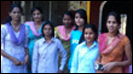
An innovative programme on adolescent health where rural adolescents were trained as broadcast journalists was launched in June in Bikaner district in Rajasthan, India. This programme is aired weekly through the All India Radio, covers many health and social issues, and is highly appreciated by the listeners of the district.
In another programme operational in India, neglected and poorly addressed reproductive health issues of dalit women, a marginalized segment of the society, are brought to the limelight through training and commissioning journalists to write on them.
|













01.jpg)